
South Star · a Space Waste program · Product Datasheet
PROX-M18
Rendezvous, Proximity Operations, Docking & Undocking Platform
On-orbit imagery · NASA public domain · Randomised on each visit
Images: NASA Image & Video Library · Public Domain
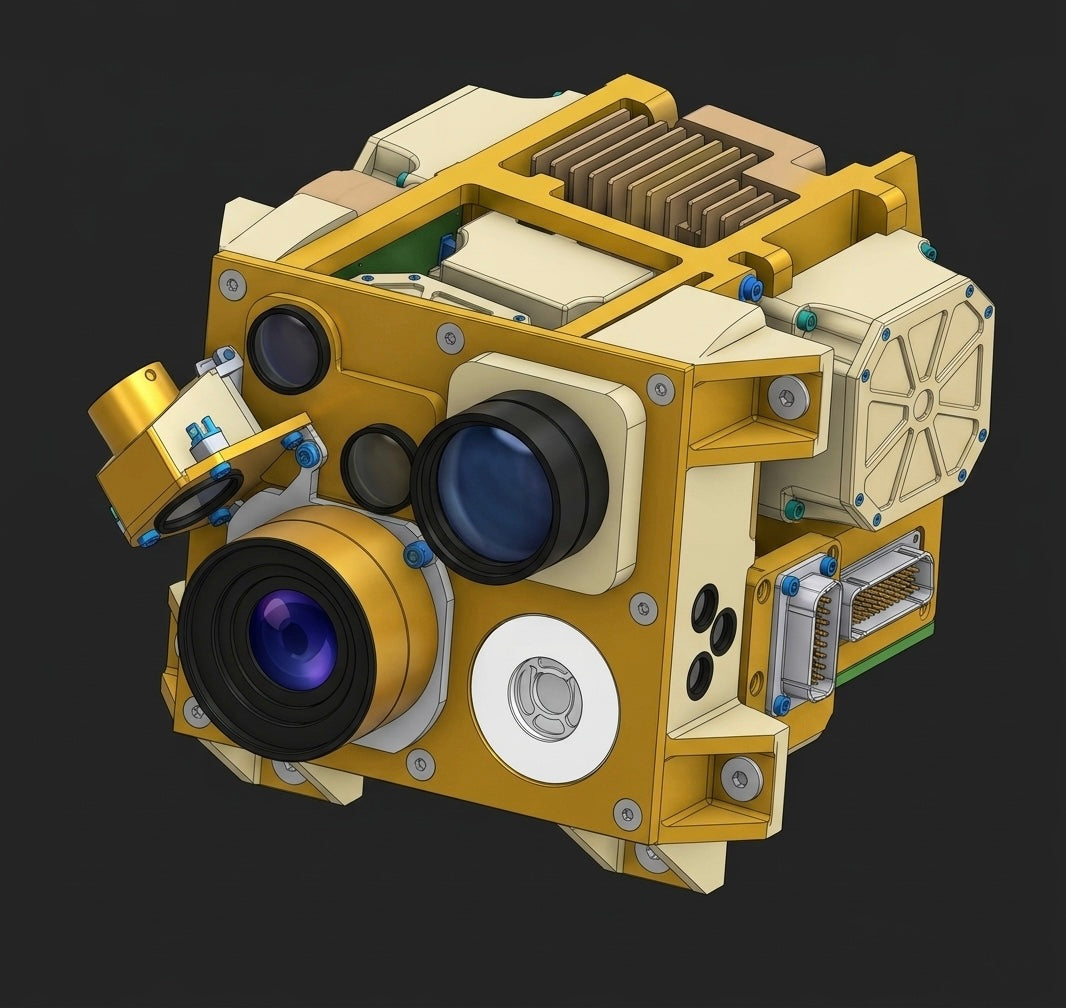
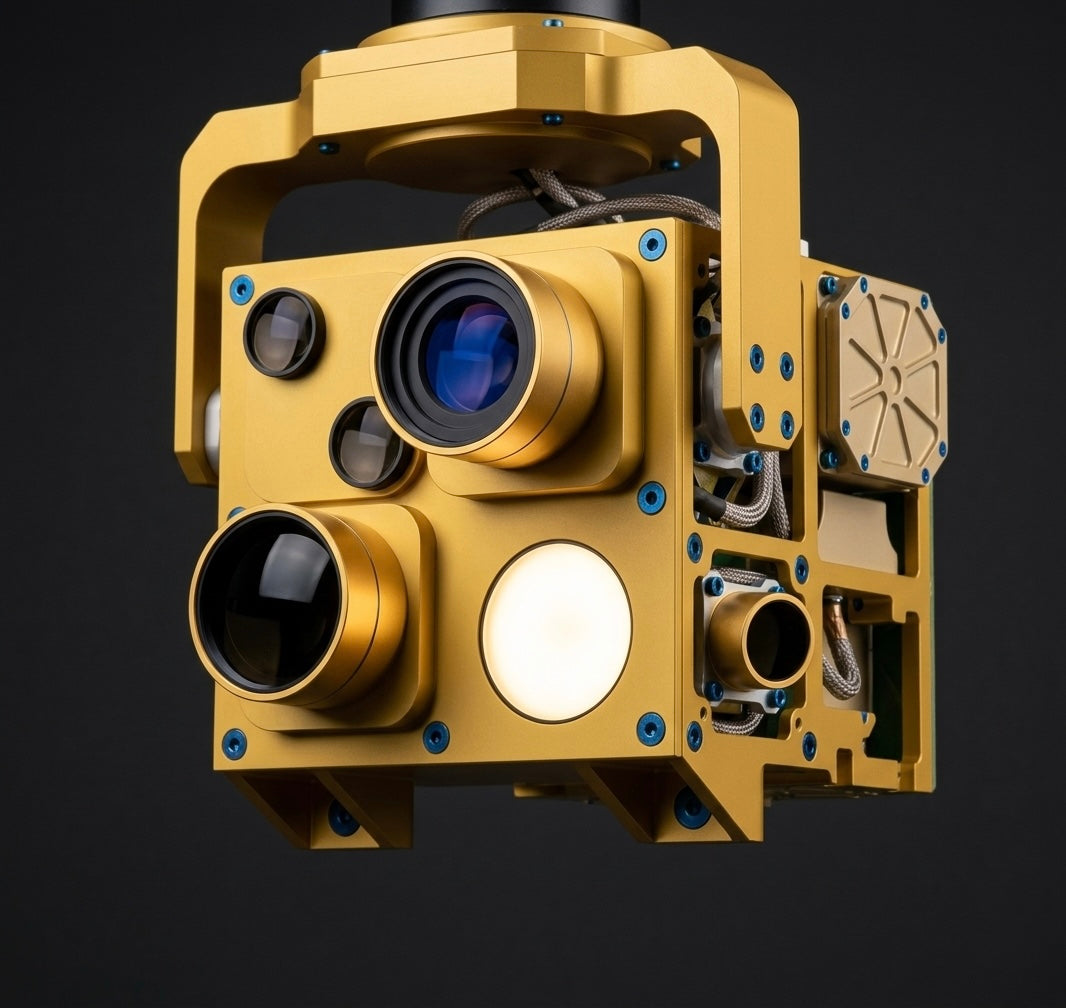
| Sensor | Qty | Performance Parameters |
|---|---|---|
| LiDARTime-of-Flight | 1 |
|
| Stereo VisionCMOS, matched pair | 2 |
|
| Wide-FOV CameraAcquisition & tracking | 1 |
|
| IMU6-DOF inertial | 1 |
|
| IR IlluminatorNear-IR LED array | 1 |
|
The South Star PROX-M18 architecture is designed against the hard-won lessons of DARPA Orbital Express (2007), the first autonomous US satellite-to-satellite rendezvous, capture, and servicing demonstration. ASTRO and NextSat, launched together into a 492 km orbit, proved autonomous docking, hydrazine transfer, and component swaps were possible. They also proved how it goes wrong. During unmated Scenario 3-1, a sensor-computer failure and a feedback loop between sensor software and the navigation filter nearly stranded the chaser. Optical glints were ingested as valid target tracks, biasing the state estimate while shrinking its uncertainty. NASA's NESC review of those anomalies is foundational reading for this product, and each major lesson maps to a PROX-M18 design decision.
| OE Lesson Learned (NESC) | LL | PROX-M18 Design Response |
|---|---|---|
| Navigation must never be taken for granted | 1 | Independent navigation-state health monitor with dissimilar cross-checks; loss-of-nav triggers a passively safe abort trajectory, not a hold. |
| IR sensing adds robustness to unanticipated lighting | 2 | 850 nm IR illumination and eclipse-rated tracking are primary-path capabilities in the sensor suite, not supplemental, because IR is what recovered OE. |
| Tightly coupled sensor and nav software mutually reinforce failures | 3 | Decoupled estimation architecture: the filter screens optical artifacts (glints, glares, hot pixels) without feeding biased target ephemerides back into sensor target selection. |
| Calibrate on-orbit with the target out of frame and bright sources in frame | 4 | Built-in calibration mode images the Earth limb and Moon with the target excluded from the field of view before any unmated operation. |
| Continuous situational-awareness imagery enables abort recovery | 5 | Low-rate SA video downlink over relay is a baseline system capability, sized for continuous coverage, not a contingency reconfiguration. |
| The filter must identify and screen erroneous sensor data | 6 | Measurement gating with innovation-based rejection and bounded covariance collapse; no single sensor can monopolize the state estimate. |
REFERENCES · NASA/TM-2011-217088 · NESC-RP-10-00628 · “RPODU Lessons Learned from the DARPA Orbital Express Demonstration” (Dennehy & Carpenter, 2011) · “Technology Development of AR&D Sensors and Docking Mechanism for the Asteroid Redirect Crewed Mission” (Hinkel et al., NASA JSC/GSFC) · Full assessment: SW-TR-001 Rev B on the Research page
Integrate PROX-M18 Into Your Mission
Partnership inquiries · Government & defense · Custom interface requirements